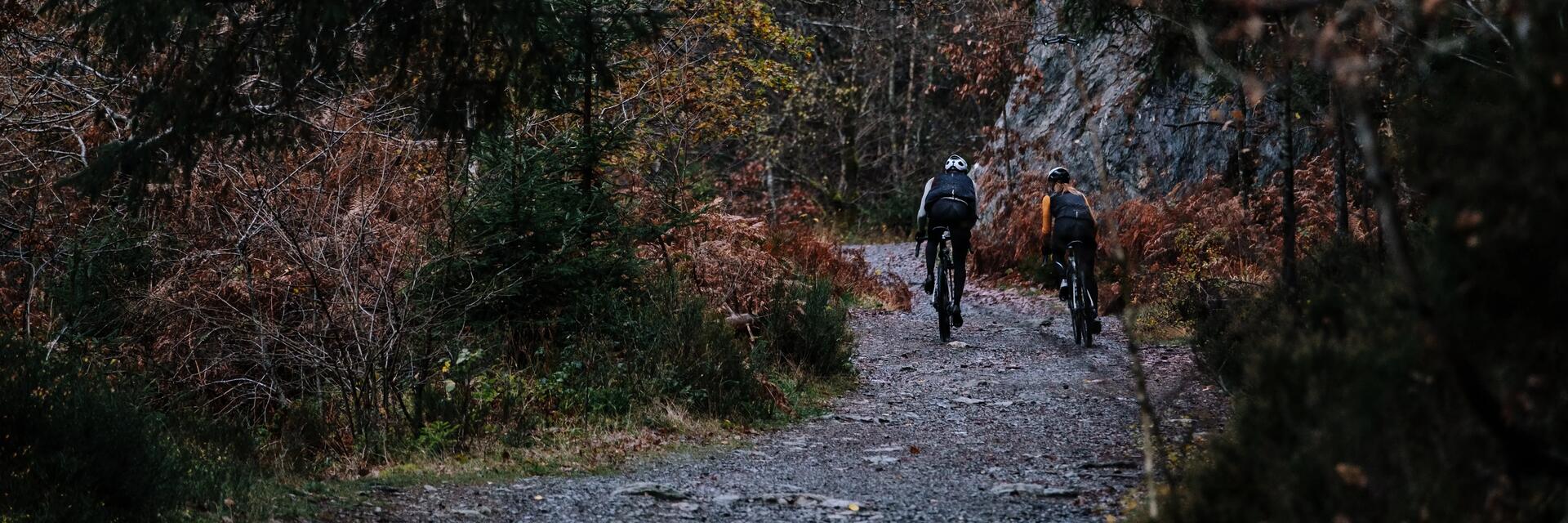
Get your bike ready for bad weather

OUR TIPS TO PREPARE YOUR BIKE FOR RIDING IN BAD WEATHER

Rainy, foggy, and/or windy weather on the horizon? Here are our tips to keep you riding through the cold and wet season while keeping your bike in good shape. Get your bike ready for bad weather!

BRAKING

Riding in bad weather isn't exactly comfortable. If on top of that a part on your bike breaks, your ride can be quickly cut short.

To avoid these unpleasantries, it's a good idea to carefully check your bike. Here are a few things to check:

▪️ Brakes
Your bike's brakes are critical to your safety, and should be checked without fail. How you check your bike will depend on the components that you have installed.

▪️ Bike brakes
In a brake system that uses rubber pads, the rubber wears down quickly in wet weather. Make sure that your brake pads are not too worn down! There is a wear indicator on the brake pads to make it easy for you to tell when it's time to replace them.

▪️ Disc brakes
If your bike has disc brakes, clean all of the brake components, and remove any grease if necessary.
If the pads or discs are worn down or damaged, go ahead and replace them.

⚠️ Important: brake parts don't like lubricants! If they do come into contact with grease or a lubricant by accident, immediately clean the discs, pads, and/or rims.

To clean a disc brake that is dirty or has grease or lubricant on it, wipe it down with a clean cloth, then apply a degreasing product such as acetone or rubbing alcohol.
As for the disc brake pads, they can be irreversibly damaged if they are greased. You can try to immediately soak them in acetone, and let the degreaser act before drying them, and rubbing them with emory cloth or sandpaper.
But the safest is to go ahead and replace the brake pads.
Tyres

▪️ The tyres
Check the general condition of your tyres. They should not have any cuts or rips. You should also check your tyre pressure before each ride, and inflate if needed. Of course this applies not only to cycling in the rain, but also generally.

▪️ Cables and cable housing
Before exposing your bike to winter conditions, you should replace your cables and cable housing to ensure they function properly all winter long.

💡 Our advice: replace them twice a year, when you do your usual bike maintenance, that is, once in the spring and once in the autumn, This will ensure that your bike is always fully operational and safe.

Get your bike ready for bad weather

DRIVETRAIN

▪️ Drivetrain
Check the level of wear on your chain, chainrings, and cogs (sprockets). Replace the appropriate components as needed.

There are two ways to check the wear on your bike chain.
Manually, by placing the chain on the larger chainring and pulling on one of the chain links on the chainring. If you can see almost the entire cog tooth, you should replace the chain. You can also use a chain wear indicator. Insert both ends into the chain links, and it will indicate your bike chain's percentage of wear. If the value is close to 100% you should replace the chain.

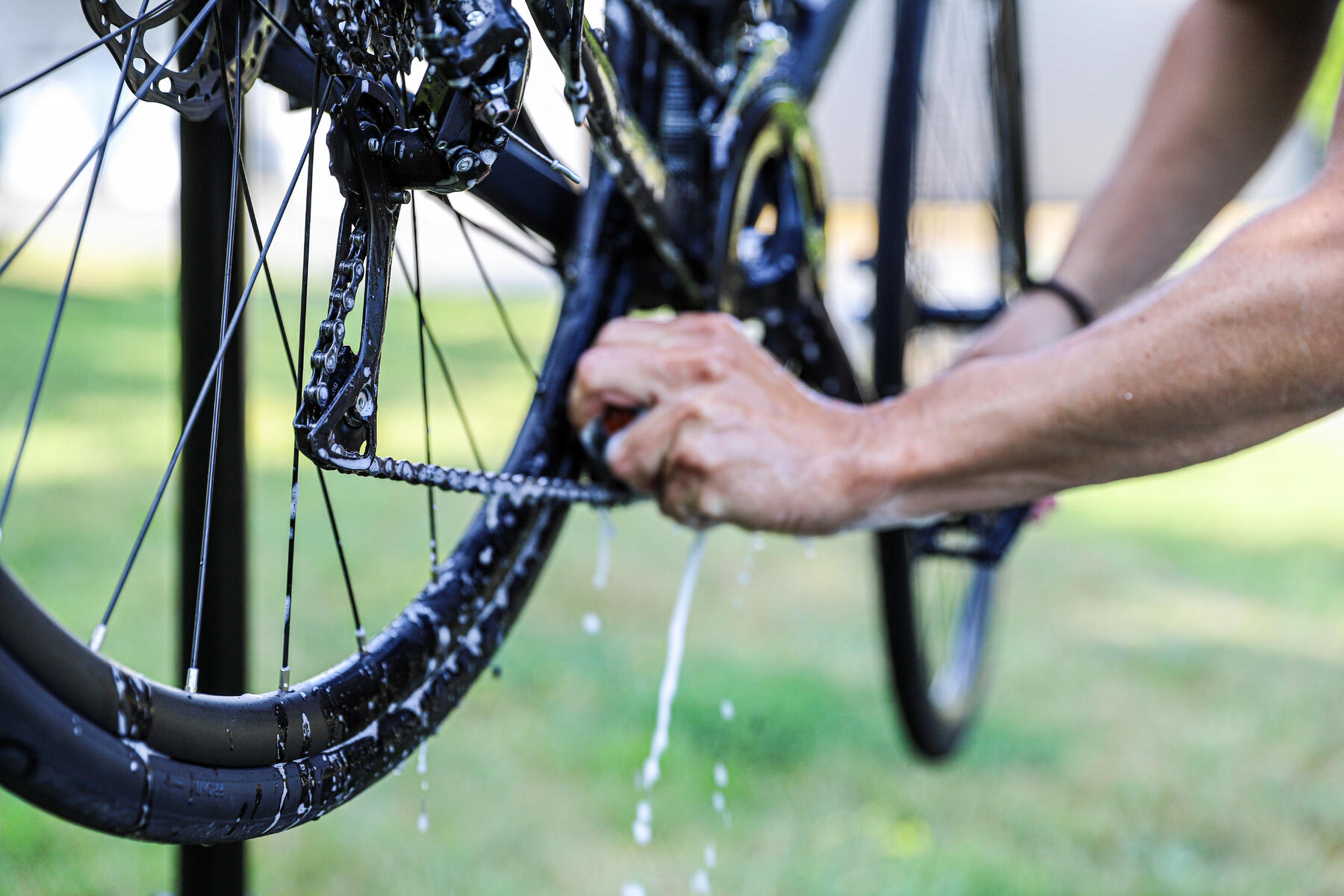
▪️ Clean your bike
Don't forget that it's essential to regularly clean your bike to ensure it continues to function properly as long as possible. To clean your bike, don't forget our three steps: degrease, wipe down, lubricate.

▪️ Skipping chain: how to fix.

If your chain feels like it has some hard spots (where there is some resistance), or it tends to skip, it's probably time to replace it.

When you change your chain, you should also replace the cassette, or at least the cogs (sprockets) that are most worn down. If you don't do so, your new chain risks skipping on the cogs that are most worn down, making it difficult or impossible to ride.

💡 Our advice: in the winter, put an old chainring and cassette set on your bike (so long as the cogs aren't worn down) and only use that set for your winter cycling. This way you avoid exposing your best equipment to poor weather conditions and/or to salt (used on roads) which is particularly corrosive. It's a tip commonly practised by road racers.

RAIN PROTECTION ACCESSORIES

▪️ Mudguards
To protect yourself from water spray and mud splatter, put a pair of mudguards on your bike.
Choose a mudguard suited to your type of cycling, and check to make sure it will properly fit your bike.

Remember: when riding in bad weather, your frame or wheels may get some water inside. Normally, small holes in the rim, or on the underside of the frame, allow this water to escape. But when mountain biking in muddy conditions, those holes can sometimes get clogged with mud and prevent the water inside the frame or wheels from evacuating.
Besides making your bike heavier and harder to ride, this stagnant water can also damage your equipment.

You now have what you need to prepare your bike for the cold and rain. So go ahead and give your bike some extra love so you can ride through the winter with peace of mind!