How do you change your bike saddle?

HOW TO REPLACE A BIKE SADDLE ?

Is your bike seat uncomfortable? Is it damaged and you need to replace it? Find out how to choose, fit and adjust your new bike saddle!

There are many reasons why you might want to change the saddle on your bike, but it's not always easy to choose the new one. Bearing in mind that it is one of the most important elements for your comfort, find out how to choose, mount and adjust your new bike saddle!

CHOOSING A BIKE SADDLE

How do you change your bike saddle?

COMFORT IS THE MOST IMPORTANT CRITERION FOR CHOOSING A GOOD BIKE SADDLE

Comfort is the top criterion for a cyclist when choosing a bicycle saddle! For a few minutes or a few hours, once in the saddle you will be constantly relying on it, hence the importance of being comfortable.

For your comfort take into account your support on your saddle, it determines the shape that will suit you best. Anatomically, men and women have morphological differences that influence the type of saddle to use for comfort.

How do you change your bike saddle?

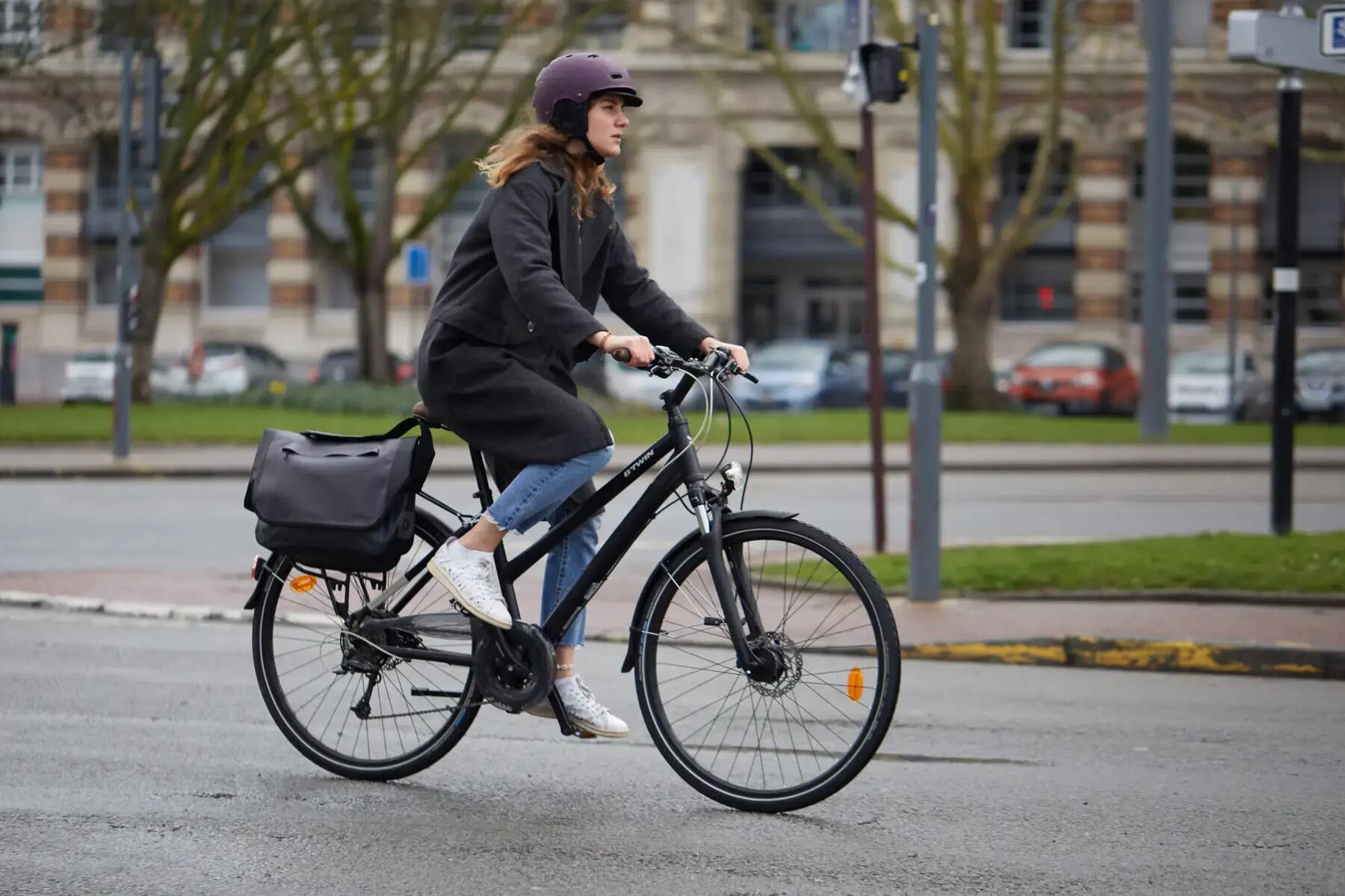
CITY BIKE, DUTCH, OR EAB

If you have a city bike, Dutch bike or EAB, your position is naturally upright with handlebars higher than your saddle. The support on your saddle is posterior, so you should opt for a soft and wide saddle.

How do you change your bike saddle?

Cycle touring, trekking

Cyclotouring or long bike rides require you to stay in the saddle for longer periods of time with a slightly forward position that results in a more central support on the bike saddle. In this case, choose a wide saddle but with a longer saddle tip to avoid possible rubbing in the groin area.

How do you change your bike saddle?

MOUNTAIN OR ROAD BIKE

Finally, sportsmen and women who ride road bikes or MTBs will need a slim saddle with a long seat tip to avoid rubbing on the inner thighs. On this type of bike, the body weight is forward with little pressure and support on the saddle. For these reasons the saddle is minimalist and ergonomic in order to provide effort over time without causing discomfort.

LEATHER OR PLASTIC: WHICH MATERIAL FOR YOUR BIKE SADDLE ?

To choose your saddle cover, here are the advantages and disadvantages of each material:

Plastic: Plastic saddles are waterproof, lightweight and generally cheaper than leather.For short trips in town, this type of saddle is ideal. On the other hand, this material is not very breathable and makes you sweat, which is not ideal for long rides or cycle touring.

Leather: Leather is a living material, it adapts to the position and shape of the rider, which makes your saddle comfortable. Once the break-in period for "the leather" is over, the leather saddle is a very good option for touring and long-distance cycling.

Padded saddles: For even more comfort you can choose a foam, air cushion or memory gel cover. Therefore, in addition to the saddle cover, the upholstery should be taken into account, especially for long daily rides. 

HOW TO INSTALL YOUR NEW BIKE SADDLE

How do you change your bike saddle?

Whether you are removing your old saddle or fitting the new one, all you need is an 'Allen key to loosen and tighten the screws that hold the saddle in place. To remove your saddle, loosen the screws holding the saddle clamp at the back of the saddle.

Fitting a new bike saddle is fairly straightforward, there are only two types of configuration for a saddle.

 Option 1: the carriage is integrated on your bike saddle and you just have to slide it on a seat post without a "clamp" or "stantion".

 Option 2: your saddle is sold with two rails but without a carriage to fix it to the post. In this case, get a saddle post with an integrated carriage that grips the saddle rails or buy the post and carriage independently.

In both cases make sure that the diameter of your seat post and your carriage are compatible to be mounted together.

HOW TO ADJUST YOUR BIKE SADDLE

How do you change your bike saddle?

Check out our playlist for adjusting your bike saddle, whether for a 90° back angle, a 60° back angle, or even a 30° back angle.

Incorrect positioning on your bike can lead to joint pain and injury over time: ankle, knee, pelvis, etc. To avoid this, take the time to make some basic adjustments to your saddle: the height of your saddle and the saddle setback, i.e. the distance between the handlebars and your bike saddle.

We explain in detail how to get the right position on your bike to pedal efficiently.

HOW TO TIGHTEN THE SADDLE ONCE IT'S ADJUSTED

If your clamp does not have a knob, you must have an Allen key that matches the size of the clamping screws. Position the saddle precisely in line with your bicycle frame before tightening completely.

If your saddle clamp has a knob, tighten the bolt and then press the knob against the seat post shaft. If the knob is too hard to tighten, adjust the opposite screw to get a perfect fit.

The setback, easy adjustment of your saddle

Is your saddle in the right place? Too far forward or too far back, adjusting the setback is important to maintain a comfortable position on your saddle during all your rides. 

Again, lean against a wall and stand on your bike with your feet at the same height (pedals horizontal). Then, using a tape measure or a plumb line, check the alignment of your knee with the end of your pedal. The line that joins your knee to the ground through the end of your pedal should form a 90° angle with the ground.

If it does not align, your saddle needs to be adjusted horizontally: Move your saddle forward or backwards by moving the rails in the jaws of the saddle carriage. 

HOW TO ADJUST YOUR SADDLE ANGLE

The adjustment of the saddle angle depends on the type of riding and the gender of the rider. Generally speaking, men prefer a slightly upward inclination whereas women prefer a slightly downward inclination, so as not to put too much pressure on the perineum.

As for use, for touring and daily use choose a downward sloping seat tip adjustment, to keep it comfortable. Cyclists who are looking for speed on the other hand, tilt their saddle tip upwards, to avoid saddle slippage that could affect their performance.

WHY ARE YOU SLIDING FORWARD ON YOUR BIKE SADDLE?

It is never pleasant to feel yourself sliding forward on your saddle. This is the result of incorrectly adjusting the height of your saddle, the forward/backwards movement of the saddle and the tilt of the saddle.

For height and setback adjustment you can refer to the previous paragraphs, here is how to adjust the inclination of your saddle

The saddle is one of the most important parts of your bike: poorly adjusted, poor quality or not suited to your activity,
you'll immediately feel discomfort when pedalling.
So take the time to pick a saddle suited to your activity and your body type, then follow our tips on how to adjust it.
Don't forget that the important points of contact with the bike don't just stop at the saddle. It's just as important to adjust both the pedals and the handlebars.