BEFORE STARTING, HERE ARE THE NAMES OF THE COMPONENT PARTS OF THE LRF BINOCULARS
The main parts to keep in mind:
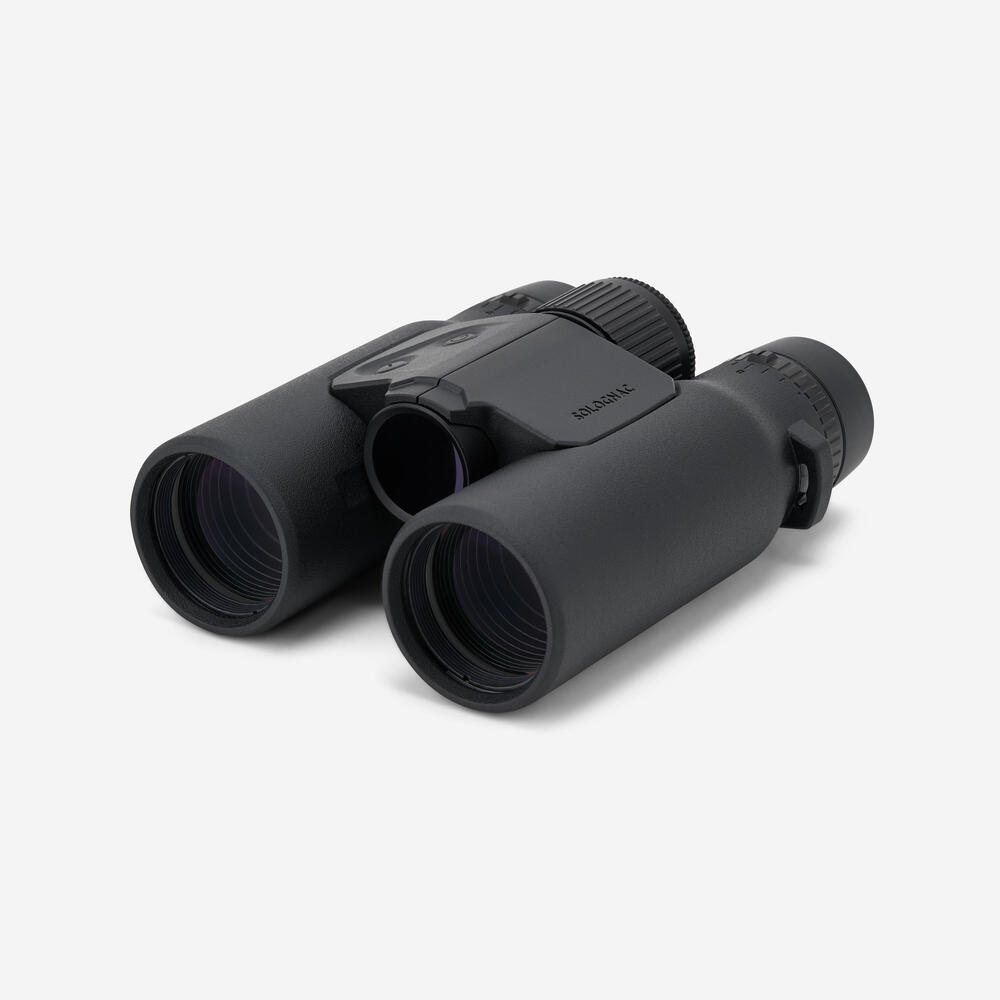
REF: 8945285
2026
Do you own a pair of Solognac LRF 1000 metres rangefinder binoculars? Check out all our after-sales service solutions to adjust, maintain, repair and extend the lifespan of your product, plus the frequently asked questions about these binoculars.
The main parts to keep in mind:
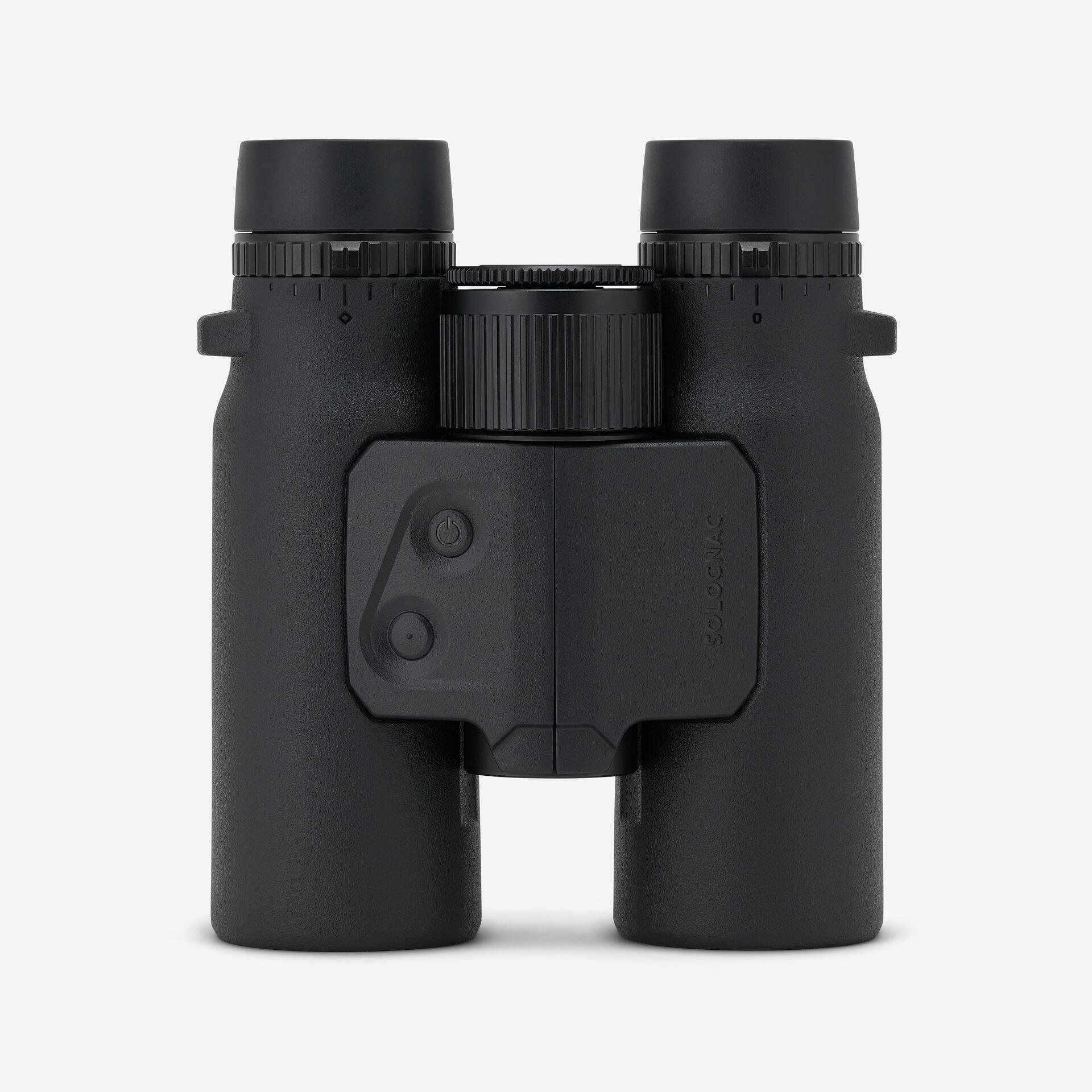
LRF 1000M 10x42 rangefinder binoculars emit a brief pulse of light directed at a target object. Distance is
determined by the time it takes for the light to be emitted and then received again by the laser’s internal sensor.
Distance measurement can be affected by many factors, mainly relating to the target object.
Light colours reflect better than dark colours.
Snow, rain and fog can interfere with measurements.
Shiny surfaces generally reflect better than matte or textured surfaces.
Solid objects, such as rocks, reflect better than bushes.
Rangefinding over water can sometimes cause reflections and inaccurate readings.
At longer distances, larger objects are easier to detect than smaller ones.
If you are having difficulty locating an animal or object, try locating another object nearby or use the
scan function to pan back and forth while monitoring changes in range.
Examples of maximum measurement ranges:
-Highly reflective targets: 1000 m
-Game: 600 m
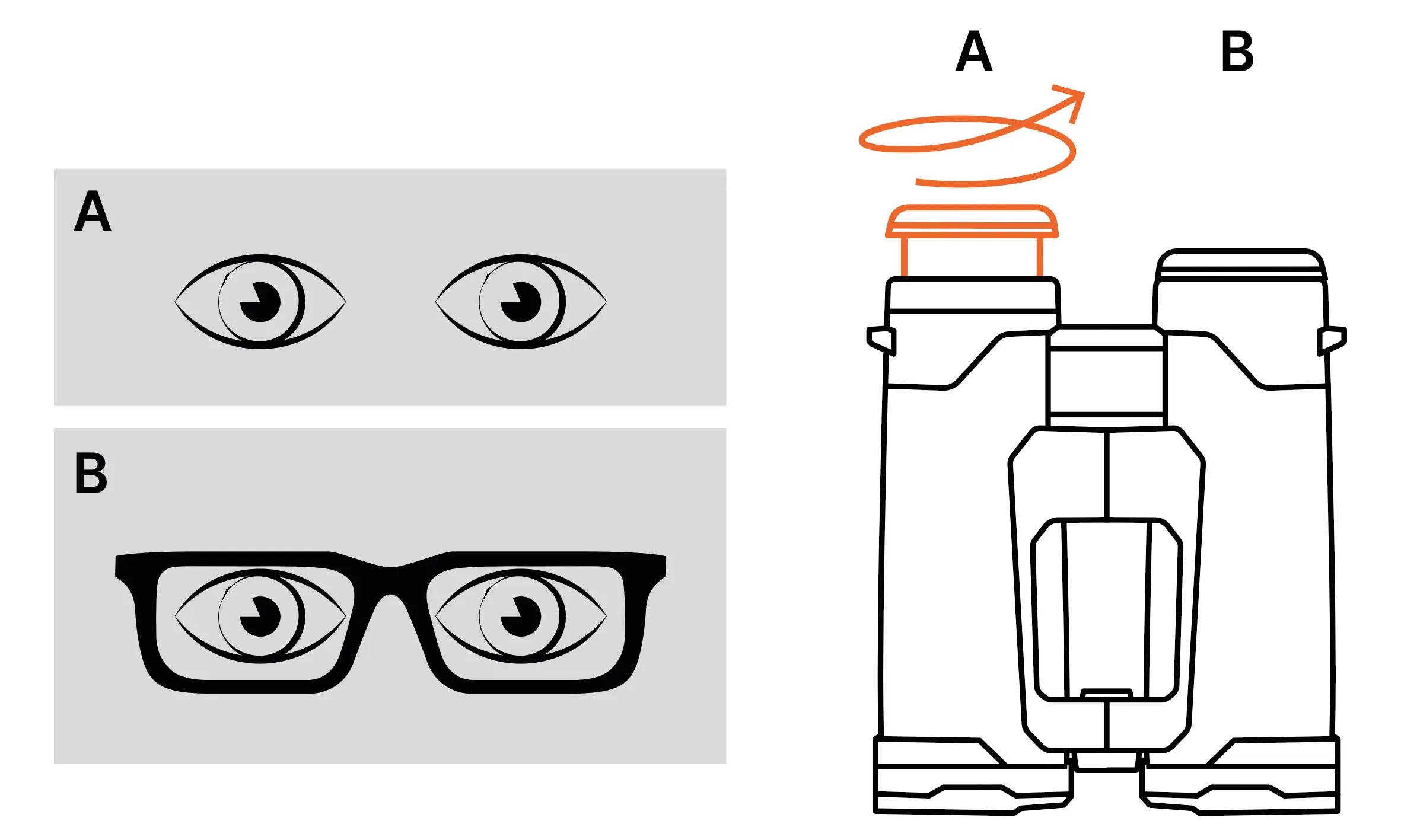
The eye cups have 4 settings to adjust the distance between your eyes and the lenses of the eyepieces: Users who wear glasses must completely screw in the eye cups to enjoy the best possible field of vision.
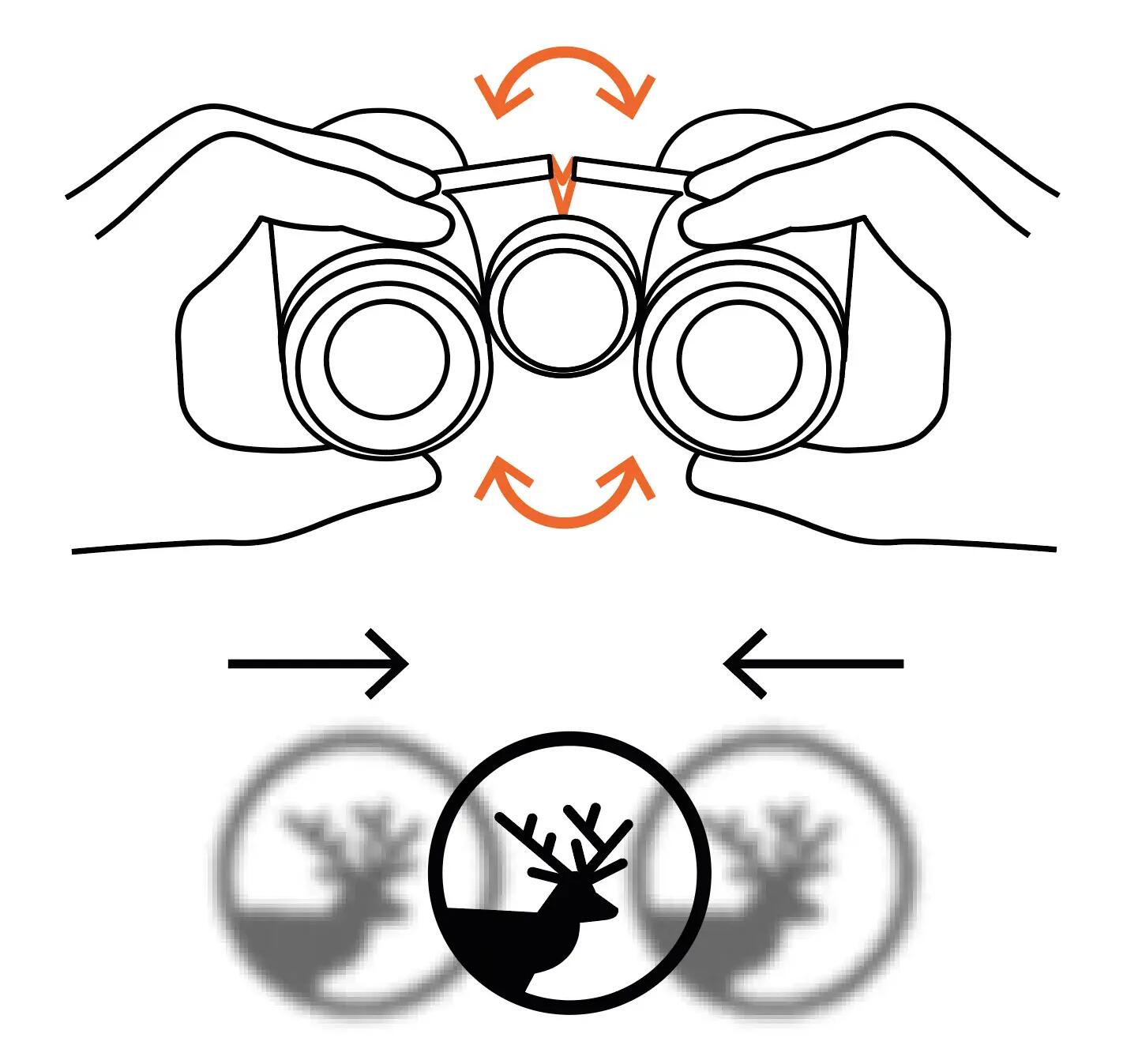
Adjust the distance between the two tubes of the binoculars until you obtain a single circular image.
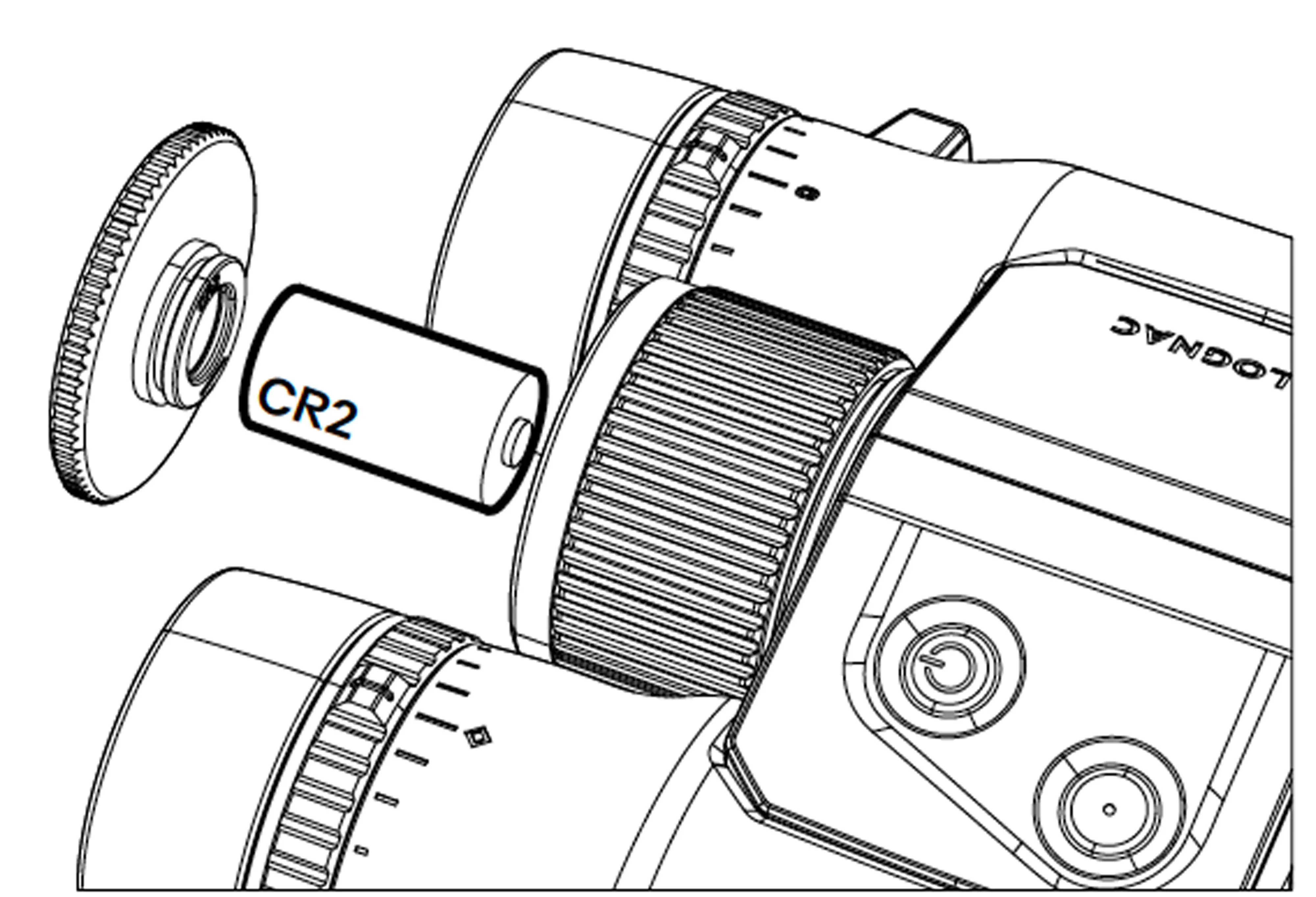
Open the battery compartment located in the focus thumb wheel. Hold the focus thumb wheel steady and unscrew the outer notched ring. Insert the CR2 3V battery, observing the indicated polarity. Then screw the cover back on.
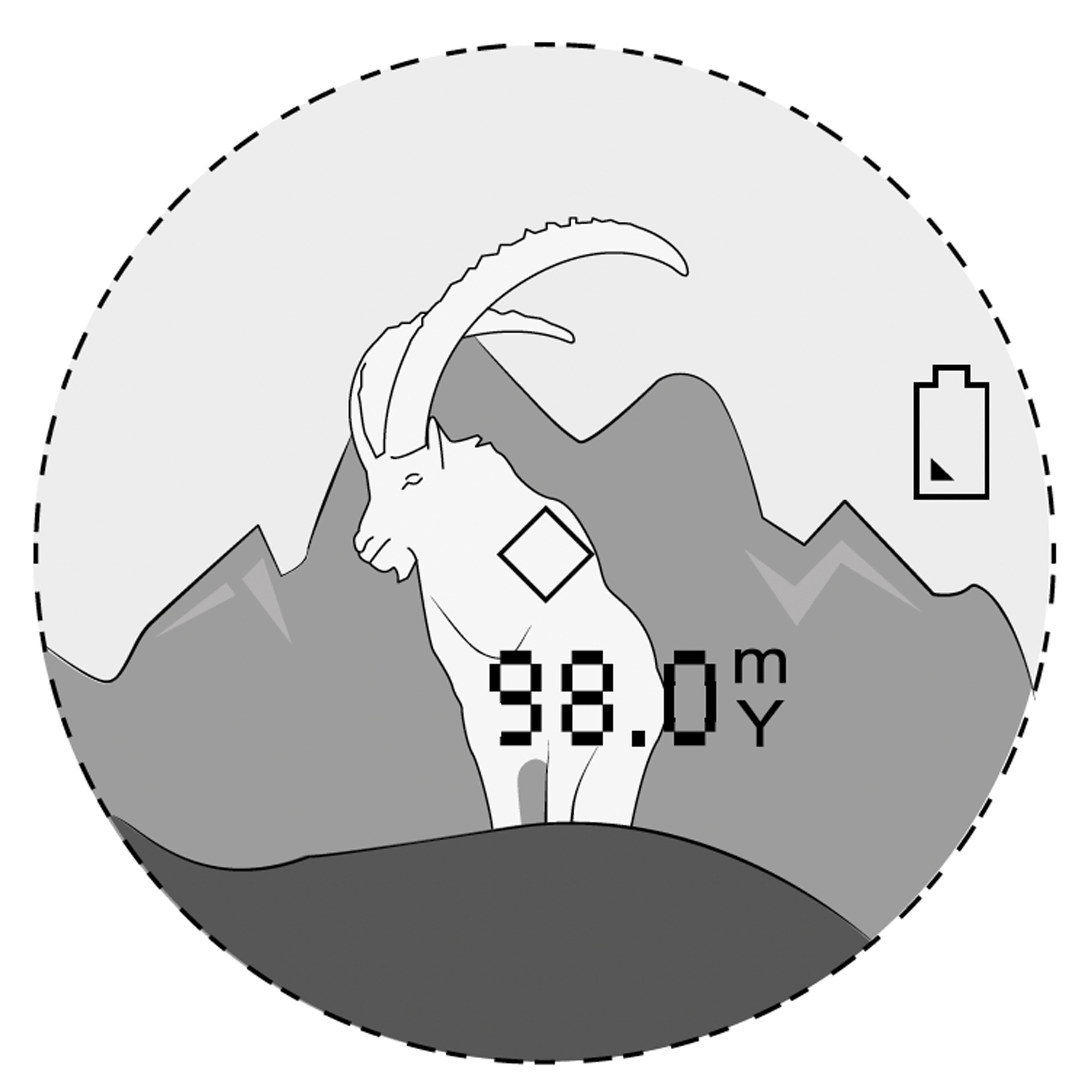
Look through your binoculars at an object and press the "on/off"button once. If the battery is correctly inserted and has sufficient power, the display will light up in the right eyepiece.
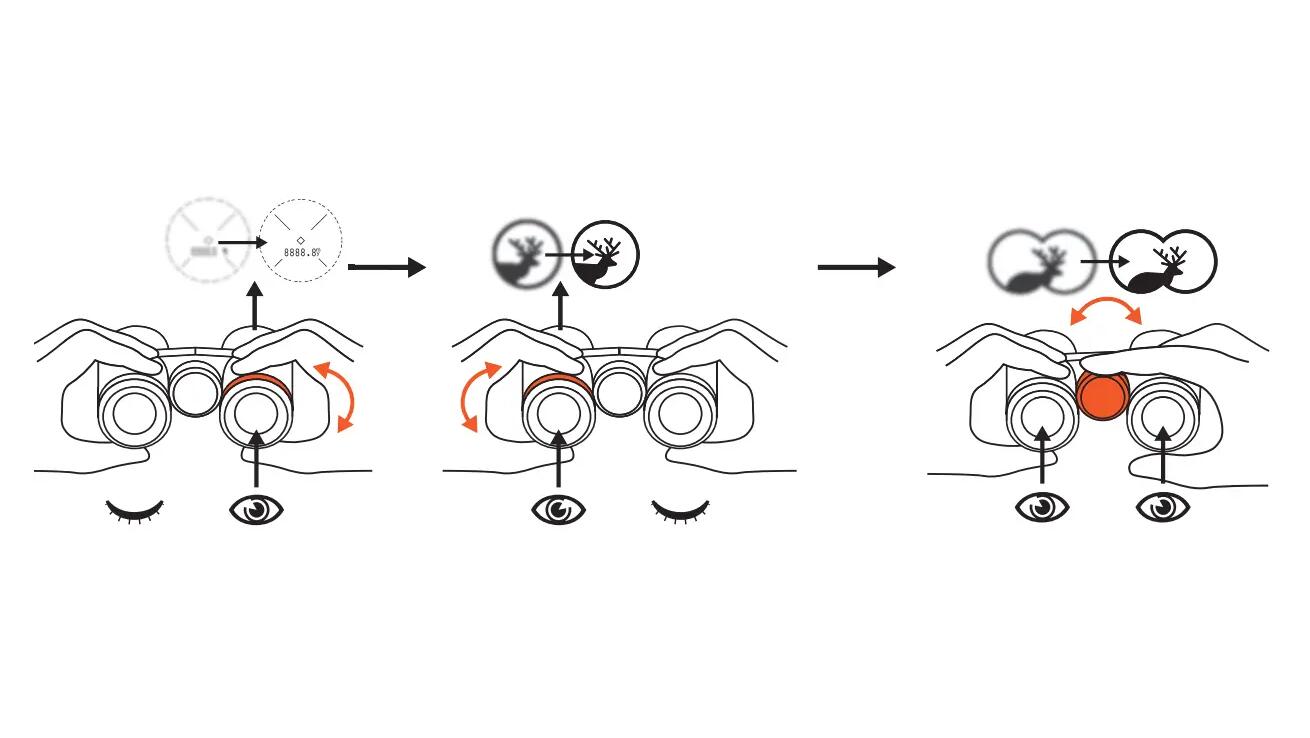
For a faultless image quality, it is important to compensate for the difference in visual acuity between your eyes and to have a clear reticle. The 4 steps to follow:
1/ Turn the binoculars ON and close the left eye.
2/ Aim for a uniform background (white sky or wall). Turn the ring on the right-hand tube until the display is perfectly sharp.
3/ Close your right eye. Looking at the same object, turn the ring on the left-hand tube until you obtain a sharp, precise image.
4/ Aim at an object between 20 and 50 m using the central focus ring. Turn the lens until you obtain a sharp, precise image of the target object.
Once the reticle and dioptre settings have been adjusted, use the focus thumb wheel for a sharp view of the subject.
Briefly press the ON/OFF button once. The LCD screen displays the mode used the last time the device was used.
- Briefly press the ON/OFF button once. A measurement is taken.
- If you hold down this button, the measurements will be scanned according to the movement of the binocular and the objects targeted (scanning function). If no action is taken, the screen goes dark after 10 seconds.
Press and hold the MODE button; the units will switch from "metres" (m) to "yards" (Y), and vice versa.
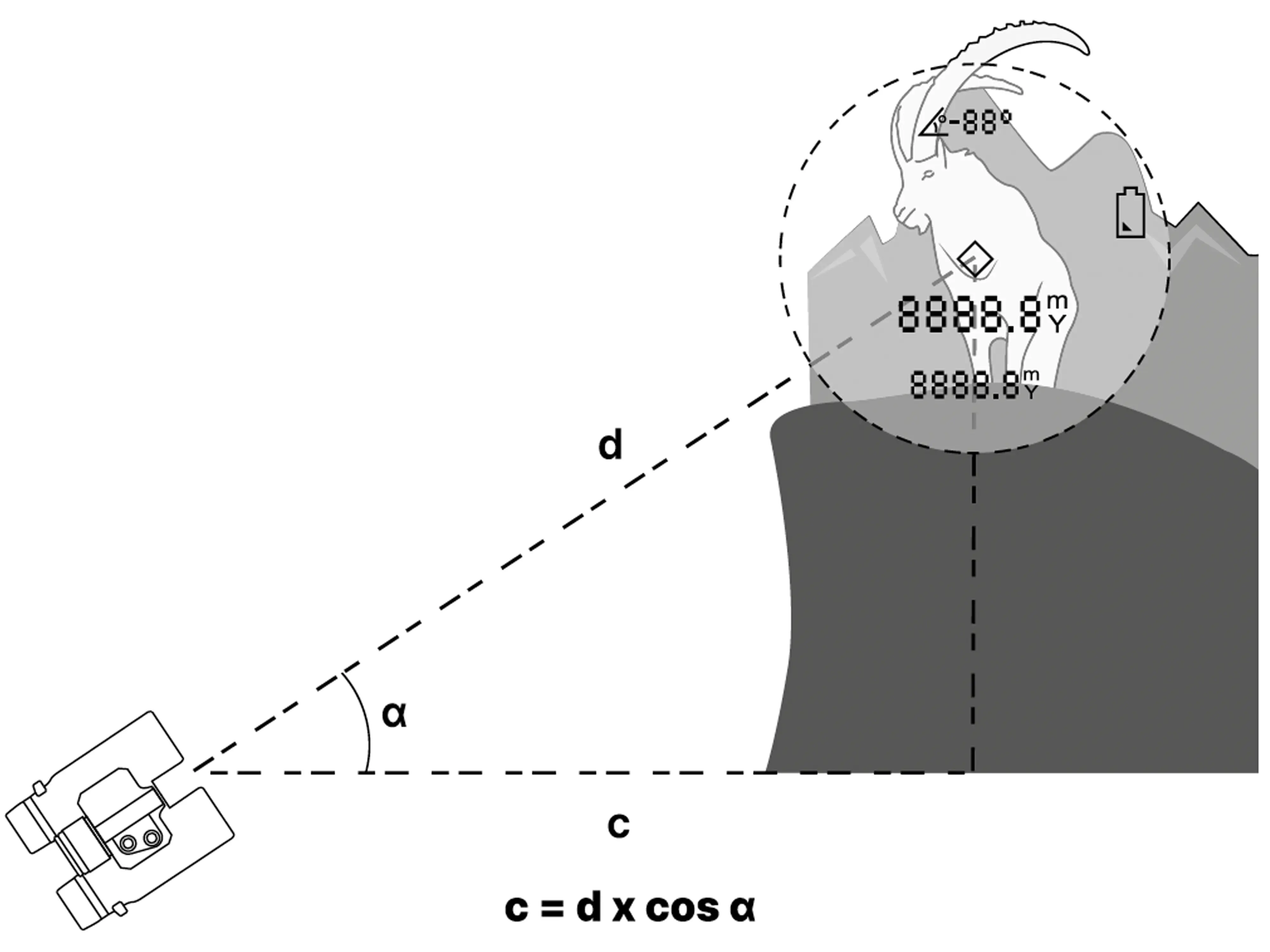
When the screen is lit, press the MODE button once. The mode then switches to the next one. There are 3 successive modes (described below).
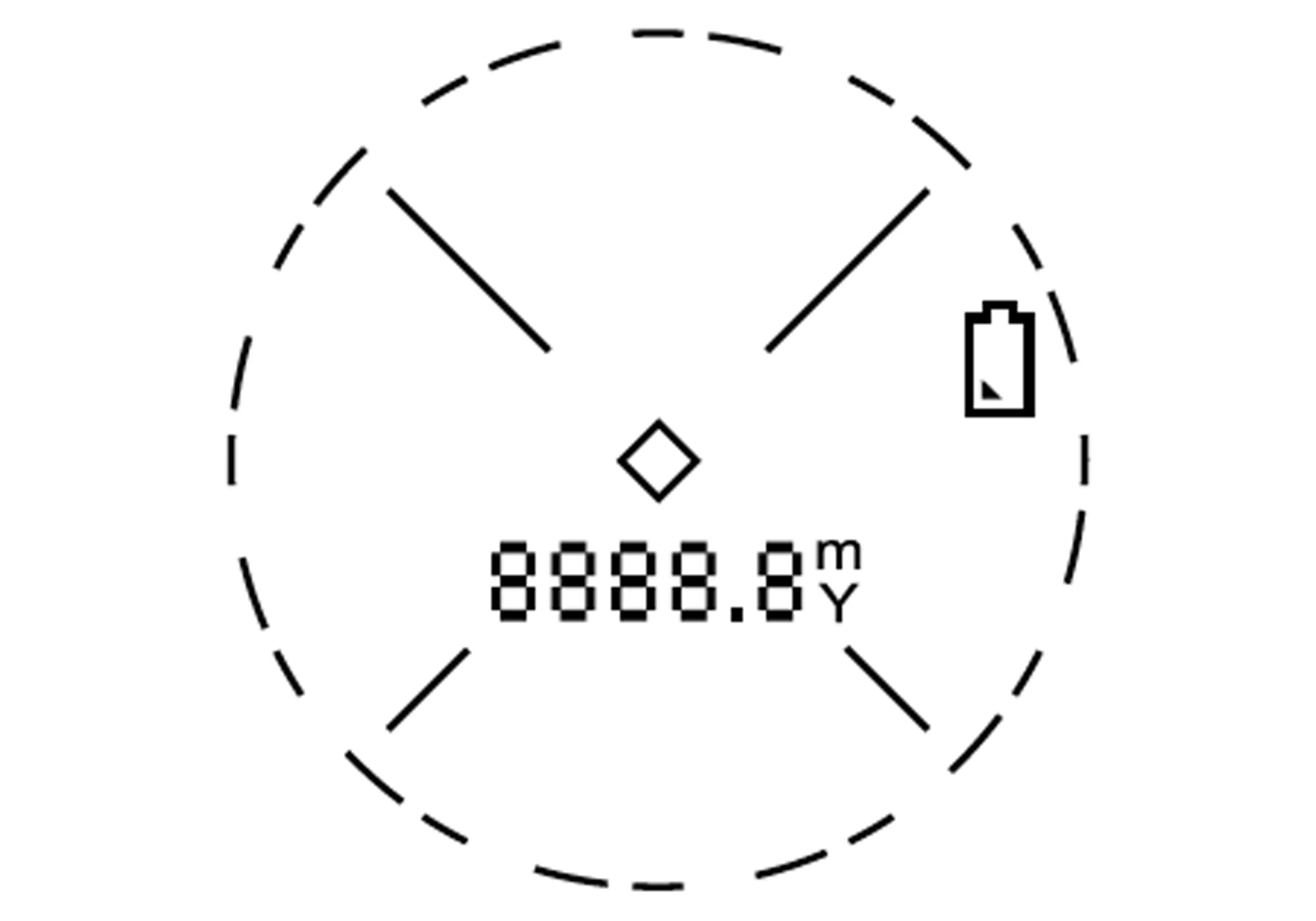
SOLOGNAC LRF 1000M 10X42
1/ First, remove any large particles from the lenses by blowing them away or using a soft brush.
2/ Next, blow on the lenses to fog them up and wipe with the optical cloth supplied. Avoid the presence of dust, oil and grease on the lenses to preserve their durability.
3/ Clean the other external parts of the chassis with a damp cloth.
Always store your binoculars in a well-ventilated, dry and cool place.
If the binoculars are damp, dry them before storing.
Never attempt to clean the inside of the binoculars or dismantle them.
To find out more, take a look at this video tutorial on how to take care of a pair of binoculars:

TUTORIAL - How to take care of your binoculars. I Decathlon
Any questions, despite this specific data sheet? Contact us directly by e-mail at the following address: [email protected]
A member of staff will be on hand to answer all your questions.
Failure to comply with the points below may result in serious injury or damage to the device.
• Never look directly at the sun, bright light sources or laser sources through the binoculars; doing so
could cause serious eye damage.
• Do not attempt to dismantle the device.
• Remove the battery from its compartment if the product will not be used for an extended period.
• Cold temperatures reduce battery performance.
• In low temperatures, store and use the product as close to your body as possible.
• Store batteries in a cool, dry place.
• Do not expose batteries to sunlight, heat or moisture for prolonged periods.
• Never dispose of batteries in a fire, heat them, recharge them, dismantle them or break them.
• Do not touch the glass surfaces with your fingers.
• When a display appears in the eyepiece, the product is activated; it emits invisible laser radiation and must
not be directed at a person.
• Do not press either of the 2 buttons while pointing at someone’s eye or while looking into the
lens-side optical system.
• Do not point the laser toward the eyes.
• Do not point the laser at people.
• If the casing of the device is damaged, remove the battery immediately and do not use the device again.
The LRF 1000M binoculars are high-quality optical instruments.
They are guaranteed by Solognac for 2 years from the date of purchase.
What is more, we promise that the spare parts will remain available for at least 5 years after the sale of the model.
If any manufacturing defects are found during this period, we will cover the cost of the repairs and of returning the product to the store of the customer’s choice. In the event of normal use and the possible discovery of manufacturing defects, the warranty may cover the breakage of an eye cup, defective vision, malfunction of the focus or dioptre thumb wheel or the failure of an accessory.
The warranty does not cover components subject to natural wear and tear, i.e.: eye cup caps, protective caps, neck strap, cloth, grip.
This free repair service is rendered null and void if repairs have been made by any party other than a Decathlon workshop, if the product has been modified, misused, dismantled, or damaged by incorrect use. By incorrect use, we mean: negligence during use, deliberate damage, a product that has been accidentally dropped, damage caused by the use of an accessory not supplied by Decathlon, attempted dismantling of the product, cleaning the lenses without following our recommendations, use that is inappropriate for this type of product, exposure to excessively high temperatures or chemicals.
Unfortunately, lenses can be scratched. However, a small scratch on the surface of the lens does not automatically reduce the optical performance of the instrument. This component cannot be repaired or replaced on Solognac binoculars.
It is normal for components to wear out over time: the eye cups, dust covers, neckband, cloth and grip. Most of the time, this wear and tear does not affect the performance or use of the product. Note, however, that the dust covers may gradually become loose. These components are available for purchase on our Decathlon website if they need replacing.
Your binoculars have an internal anti-fog coating: they are purged with nitrogen. This prevents the binoculars from fogging up. Even with the water-repellent coating applied to the LRF 1000M binoculars, there may still be some fog on the external lenses. Light fog may also appear inside the tubes for less than 5 minutes in the event of severe thermal shocks.
Note: after an outing, the binoculars must be aired and dried before being stored, and the dust covers must be installed, otherwise condensation may form on the lenses over time.
Always remove large particles first. Use a soft brush or blow clean. Large particles such as grains of sand or salt can scratch the surface of the lens when cleaning. To clean thoroughly, we recommend blowing on the surface of the lens to deposit a thin layer of condensation and then wiping it with the cloth supplied. Never use a detergent. Never press hard or apply force when wiping lenses. We do not recommend using cleaning liquids for the glasses, unless they are also recommended for cleaning binoculars, as some of them may damage the coating on the lenses.
Before storing your binoculars, make sure the binoculars and the neck strap are dry, before putting the protective caps back on to prevent the formation of condensation that cannot be evacuated.
Once they are dry, you can put the protective caps back in place and store the binoculars in their case in a dry, well-ventilated place.
The first thing to do is check that there is a battery in the battery compartment and that it is working (CR2 3V battery).
Next, make sure your fingers are positioned correctly and not "blocking" the laser sensor at the front.
It may also be that your target is too small or too far away for the rangefinder, or that it does not reflect the laser sufficiently (e.g.: sand, tall grass).
Finally, if you still encounter difficulties despite these tips, please refer to the section "Operating the LRF 1000 10x42 binoculars".
You no longer use your LRF BINOCULARS and do not know what to do with them? Instead of throwing them away or just leaving them lying around, sell them on the Decathlon second-hand platform! Enter all the information about your product on-line (click on the button below), then we will suggest the best sales solutions for you. Then, all you have to do is drop them off at a store to complete the procedure.