Maintaining and repairing an MT 500 sleeping bag

REF: 8655395, 8513487, 8542716

MAINTAINING AND REPAIRING A KIDS’ SLEEPING BAG

2022

Do you own one of our kids’ sleeping bags and have a question about how to maintain or repair it?

We’ll give you all the necessary information so that you can keep your product as long as possible!

First use

How to twin and untwin your arpenaz sleeping bag ?

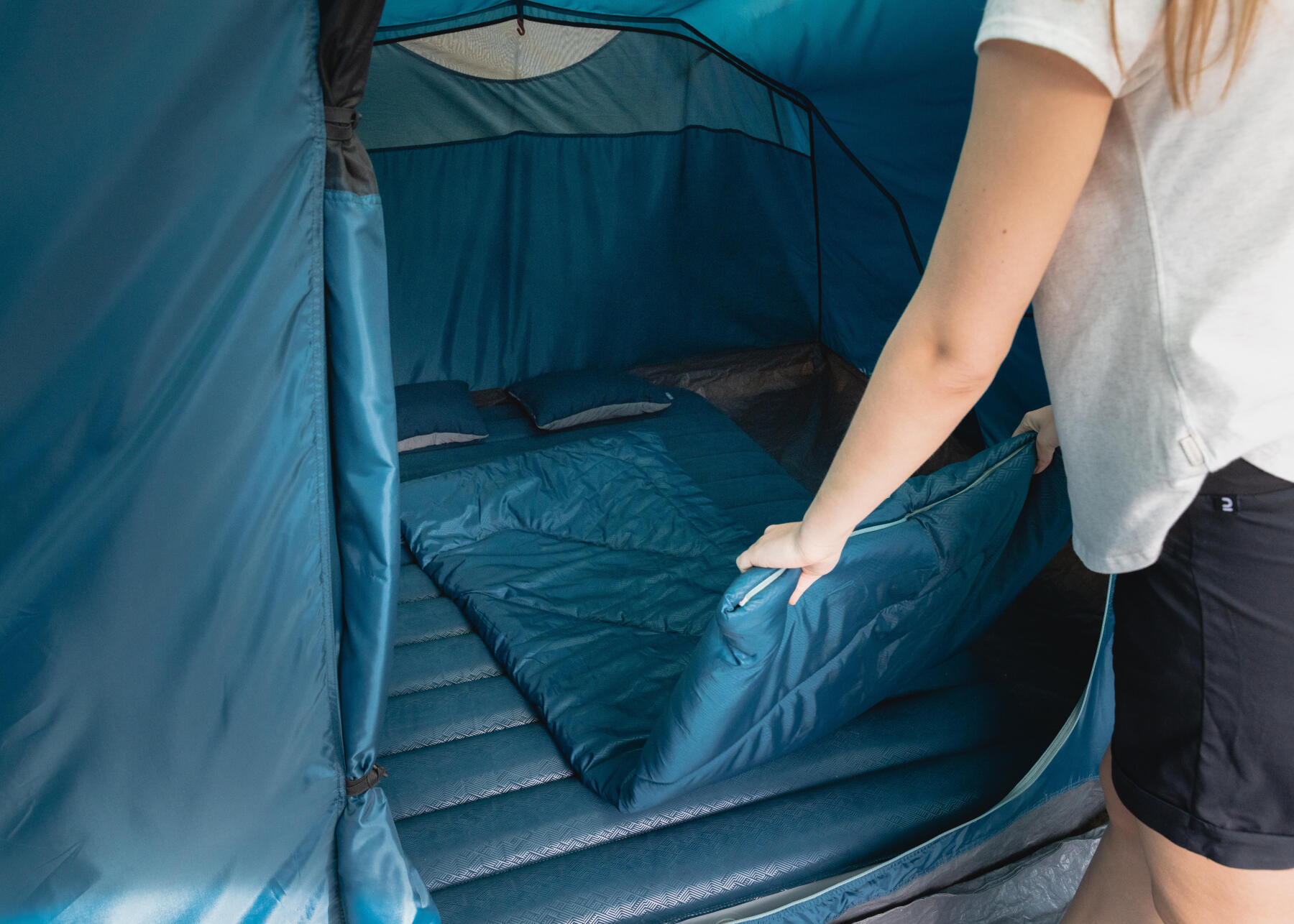
Would you like to share your sleeping bag with your camping companion? 

All Arpenaz sleeping bags except the Arpenaz 20°C sleeping bag can be twinned.

To combine the bags, you can use the zips on the sides. Follow each step in the video opposite.

Maintaining and repairing an Arpenaz sleeping bag

How to fold up your sleeping bag

Good news! You don’t need to fold your sleeping bag to store it in its cover!

If you always fold your sleeping bag in the same way, there is a risk that the wadding will always be compacted in the same place.
Your sleeping bag will then be less insulating.

Storing your sleeping bag loosely allows you to preserve it. In addition, you will save time and energy!

Maintaining and repairing an Arpenaz sleeping bag

How to properly engage the zip of the sleeping bag

Before talking about repairs, we are going to talk about how to use your sleeping bag correctly. A lot of customers contact us saying that the zip on their sleeping bag looks broken. Most of the time it is simply an issue with cursor alignment.

Indeed, most Forclaz sleeping bags are designed to be twinned. This is a clever way to share a sleeping bag with your trekking partner (with explicit consent from both, of course). But, given that the zips are fully open, properly aligning and nesting the sliders can be tricky.

Also take the time to close your sleeping bag completely to avoid getting fabric caught in the zip and having to force it.

Zips can also break: if this happens, we recommend you bring your sleeping bag back to the store or ask a seamstress to replace the zip.

Properly engaging the zip of the sleeping bag

What is the temperature rating? 

The comfort temperature is the lowest outside temperature at which a person in a relaxed posture feels comfortable and neither hot nor cold in their sleeping bag. 

Comfort temperatures are tested by an independent laboratory (AITEX) according to the European standard ISO 23537-1 of 21/01/2017. 

What is the limit temperature?

The comfort temperature is the lowest outside temperature at which a person curled up in a sleeping bag is neither hot nor cold.

The comfort temperatures are tested by an independent laboratory (AITEX) according to the European standard ISO 23537-1 of 21/01/2017.

How to avoid feeling cold in your sleeping bag

The comfort temperatures of sleeping bags are defined by European standardised tests. 

But sensitivity to cold also depends on the individual and the climatic conditions. Check out several tips on how to avoid feeling cold when sleeping in a bivouac.

I’ve lost my storage bag.

You might lose your storage bag or stuff sack when in the mountains. Don’t worry, they are available on the Decathlon website!

Sleeping bag

Caring for your arpenaz sleeping bag

Cleaning your sleeping bag

Here are the steps to follow to properly clean your sleeping bag:

- Close the zips of your sleeping bag tightly. The zips are sensitive to washing and may lose their original shape if not kept closed. 

- Place your sleeping bag in the washing machine.

- Add two or three tennis balls (new balls or balls which have been cleaned with bleach beforehand). These balls will help to beat the sleeping bag and improve the washing, without damaging it.

- Launch a 30°C program without a spin cycle.

- Dry the sleeping bag in a tumble dryer, always using tennis balls to give it some fluff. A cotton sleeping bag will need to be dried for a longer period of time (although you should not increase the drying power as this will damage your bag). Drying your bag in the open air may cause it to lose its loft.

And if not, don’t hesitate to take it to the dry cleaners, that works very well too!  
Storing your sleeping bag

This advice applies to every type of sleeping bag: It’s best to store it uncompressed.
Keeping the sleeping bag compressed in its storage bag can damage the filling, which will lose its fill power. Although sleeping bags filled with wadding are less delicate, wadding, like down, does not react well to being compressed for long periods of time.

There are two solutions possible:
- use the storage bag without tightening the drawstring
- use a bag with the least amount of compression possible (e.g. a large shopping bag)
- use a storage bag

Restoring the water repellent property of your sleeping bag

Over time, the application to make your sleeping bag water repellent may deteriorate. However, it is quite possible to reactivate the water repellency using a re-waterproofing liquid.

Repairing a snag or hole in your sleeping bag

Sometimes, your sleeping bag may have a snag. It is important to repair snags quickly using a patch so that the thermal insulation of the sleeping bag is preserved.

Choosing to repair it means acting collectively to reduce our impact by extending the life of our products.
The Decathlon store workshops can repair the snag in your sleeping bag. Check out below the service that you can request from your nearest store.
NB: not all stores are equipped to carry out the repair locally. In this case, your product will be sent to a regional workshop and will be kept for a longer period of time before you can recover it.

> To apply the patch, our workshops carry out a heat sealing process.The resulting high-quality patch will extend the lifetime of your sleeping bag and preserve the warranty. However, if you decide to repair your sleeping bag yourself, the product warranty will no longer be valid.

Patching - Decathlon workshop

Repairing a snag or hole in your sleeping bag by yourself

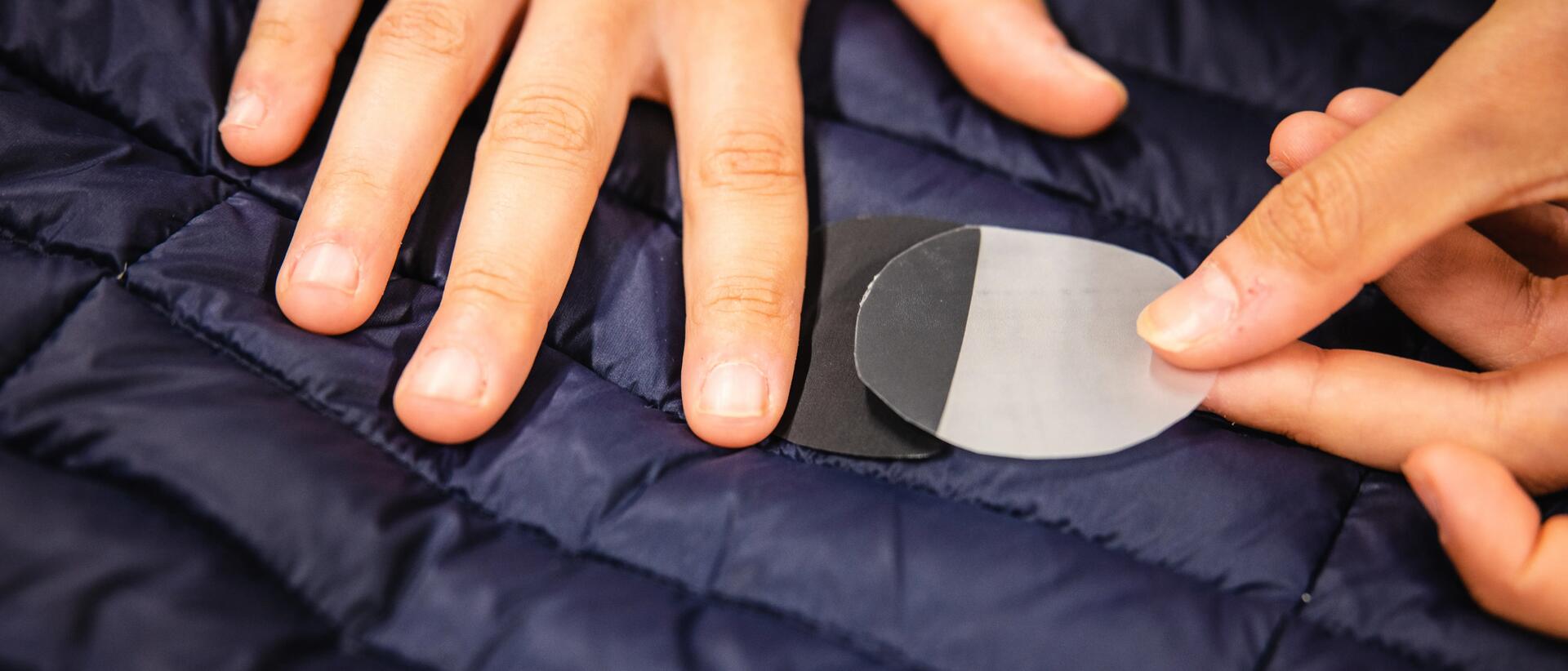
When camping, a tear in a sleeping bag can happen and the good news is that it can be repaired! Indeed, you can either mend it or patch it so that the tear doesn't get any bigger letting the synthetic fibres or feathers escape. This solution is preferable to sewing, which risks creating thermal bridges. 

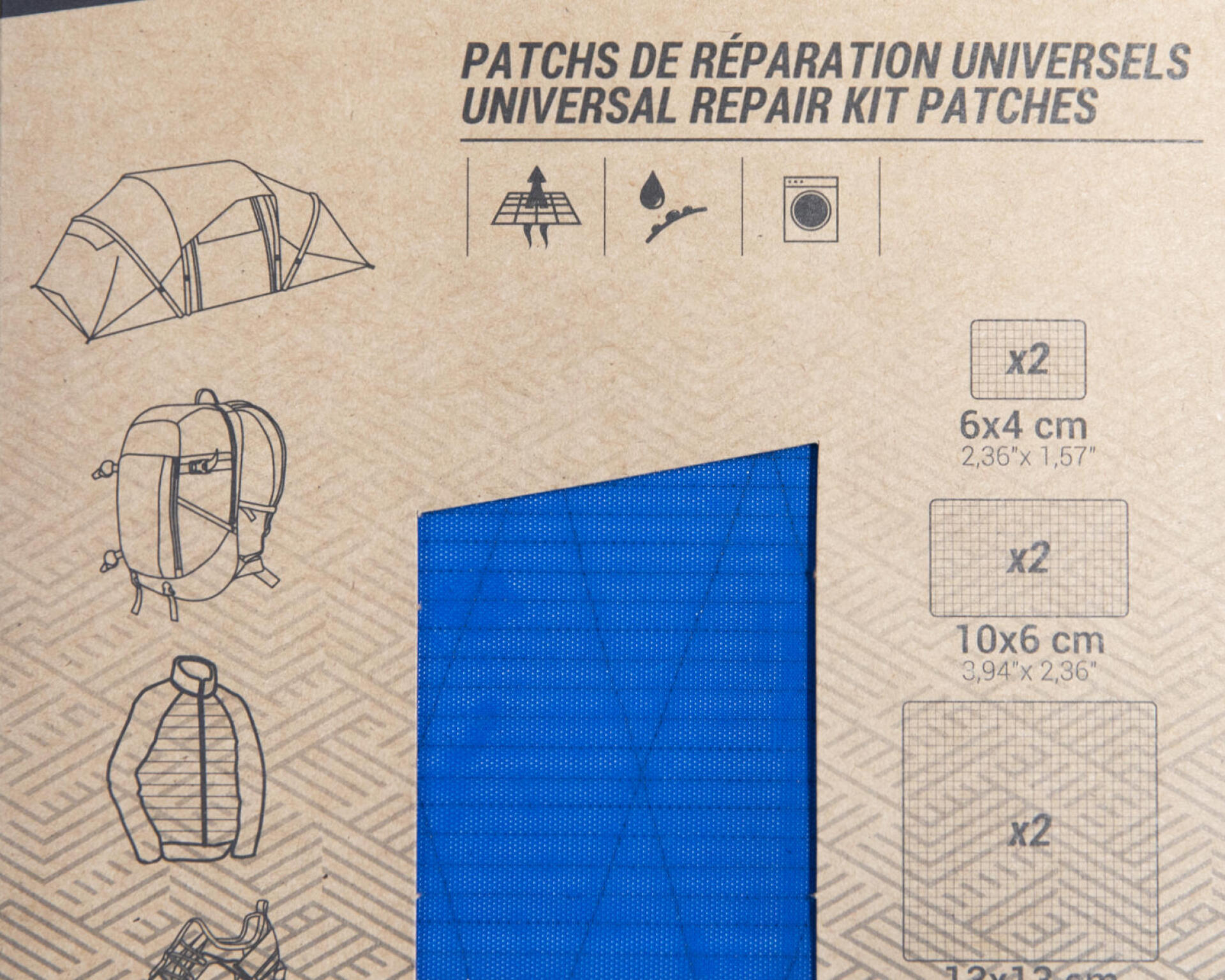
Your best friend will be the self-adhesive repair patch. Cut a round-edged rectangle one or two centimetres larger than the size of the snag, glue it to the clean, flattened fabric and that’s it - you’re good to go!

You can also get an iron-on patch from a haberdashery. You can apply it with an iron according to the instructions on the patch.

Giving a second life to your sleeping bag

Have you stopped using your sleeping bag and are wondering what to do with it?
Instead of throwing it away, don't hesitate to resell it second-hand using the Decathlon Second-hand platform! Fill in all the information about your product online. We will therefore offer you the best sales solutions, then you can drop off your product in the store to finalize the procedure.